

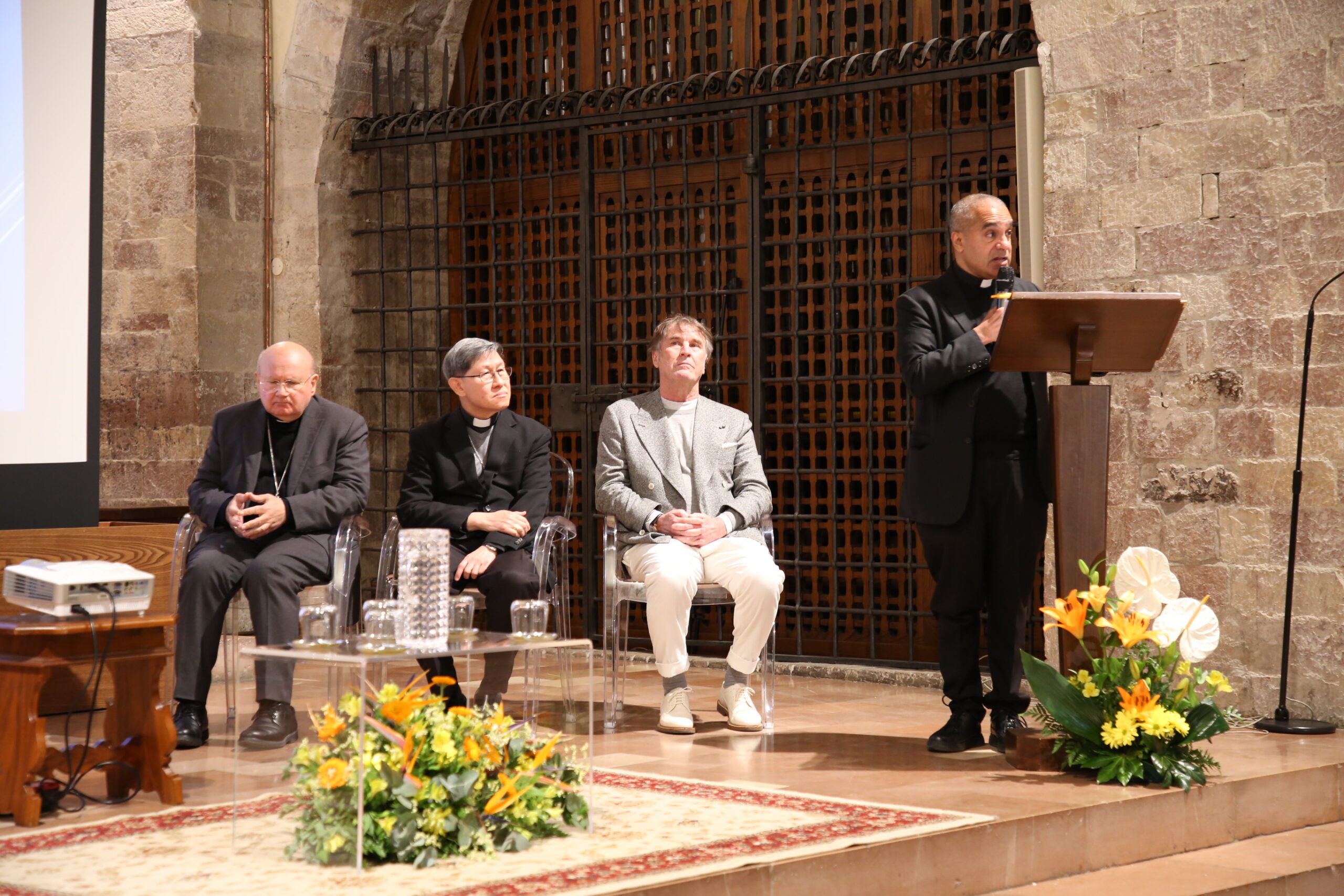


The winner of the 2nd Edition 2023 of the “International Award Francis of Assisi and Carlo Acutis for an Economy of Fraternity” comes from Chad, in the African continent, with a project entitled “Bethléem, la maison du pain” (“Bethlehem, the house of bread”).
The project “Bethléem, la maison du pain” was born as a fraternal economic process “from below,” with the desire to build and launch a bakery and other baked goods workshop where poor and disadvantaged boys and girls can work together, sharing their talents and using local resources, to take care of themselves and their community through dignified work. It involves 12 young people from Baïbokoum, a small town in the far southwest of Chad, one of the countries with the highest poverty rate in the world – ranked 191st out of 192 countries according to the 2022 Human Development Index – and located among complex, conflict-ridden, and unstable territories such as Libya, Sudan, and the Central African Republic.
The local economy of Baïbokoum is entirely in the hands of Muslims: the Christians of the village are the poorest of the poor. It is based on very poor agriculture due to lack of means and processing capacity of raw materials. The only commercial activity and the only source of income, practiced by the population, including young people, is the production of local alcohol. Thus, the population, especially the youth, live in conditions of extreme poverty: in most cases, boys and girls suffer violence, do not have the economic means to pay for their studies, and often fall into addiction to alcohol, drugs, tobacco, and local alcoholic beverages. Public schools barely function, leading to rising illiteracy, delinquency, and unemployment.
The 12 young people who are joining together, thanks to the encouragement and accompaniment of the Franciscan Sisters of Saint Angela on site, are poor and marginalized: boys and girls from the streets, excluded from their communities because of illness considered impure, such as epilepsy, orphans, unemployed, a single mother, a boy with parents suffering from epilepsy, and another with blind parents.
To achieve the goal of creating, in such a context of extreme cultural, social, and economic poverty, an entrepreneurial environment and model of fraternity called “Bethléem, la maison du pain,” the project demonstrates a particular sensitivity to sustainability, generativity, and creativity, with a clear and transparent budget, and a specific and innovative design, production, and distribution plan. From August 2023 to June 2024, the young people will receive ongoing training on the economy of fraternity, on baking techniques, and on the use of equipment, during and beyond the period of constructing the workshop and purchasing machinery (scheduled between July and November 2023), financed by the Award for the start-up. This will make extensive use of local stakeholders and suppliers, and workers from nearby towns and villages, thus promoting and supporting the local economy.
The income from sales, which will take place from December 2023 to June 2024, will be reinvested in the purchase of raw materials and the establishment of production, allowing fair and regular remuneration of the young people involved in the start-up. Furthermore, relying on the increase in financial resources derived from the sale of bread and other baked goods in the local market – using bicycles for door-to-door distribution in the city’s neighborhoods, in nearby markets, and at the bakery itself – the aim is to extend the production model to other food products and to set up a small workshop for soap production. Natural and local resources such as shea or peanut seeds will be used, involving other young people in situations of poverty.
Another important point is collaboration with the Franciscan Sisters of Saint Angela as a sign of fraternity capital, not only locally but also as financial support: the Congregation contributes with a co-financing share of €10,000 for the first year of activity and with an annual share of €5,000 for at least the following 5 years. This represents a further guarantee of the credibility and sustainability of this forward-looking project.
The goal is to ensure that poor and marginalized young people can become protagonists of their own redemption through activities of fraternity, significant for the development of their community. Bringing young people together, helping them to understand that by working together, sharing their talents, and using the local resources that nature provides, it is possible to overcome cultural, social, and economic poverty through the creation of a grassroots economy of fraternity, which can serve as an example for other young people and as encouragement for the entire territory.
The project’s protagonists testify: “The boys and girls involved are very happy because they feel that their talents are valued, they feel recognized as people worthy of regular work, and they see the possibility of redemption from their condition of misery. The Award would offer the opportunity to the young people involved to transform creativity, intuition, dreams… into an economic enterprise.”
One year after receiving the award the bakery was built and operational